Cats with kidney disease require wet food for hydration, but standard automatic feeders only dispense dry kibble. Here are the options that actually work for dispensing refrigerated wet food on a schedule.
The CKD Hydration Dilemma
Chronic Kidney Disease (CKD) is the most common metabolic disease in older cats. The cornerstone of managing CKD is maximizing hydration because compromised kidneys lose the ability to concentrate urine.
Veterinarians universally recommend switching a CKD cat from dry kibble to a canned wet food diet, which is roughly 75-80% moisture.
This creates a significant logistical problem for working cat owners: How do you feed small, frequent meals of wet food when you aren’t home?
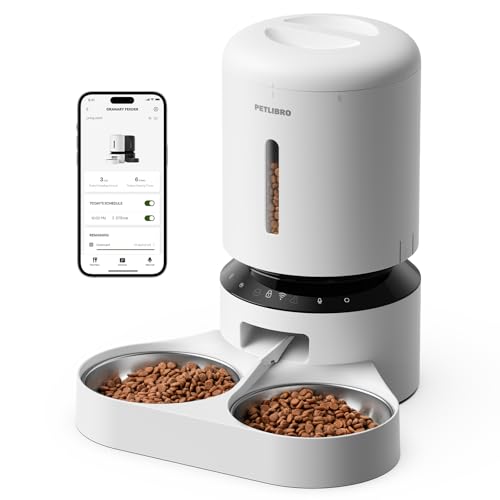
Standard automatic feeders—the ones with tall hoppers that dispense kibble—cannot handle wet food. The moisture clogs the internal mechanisms instantly, and the food would spoil at room temperature within 4 hours, creating a bacterial hazard.
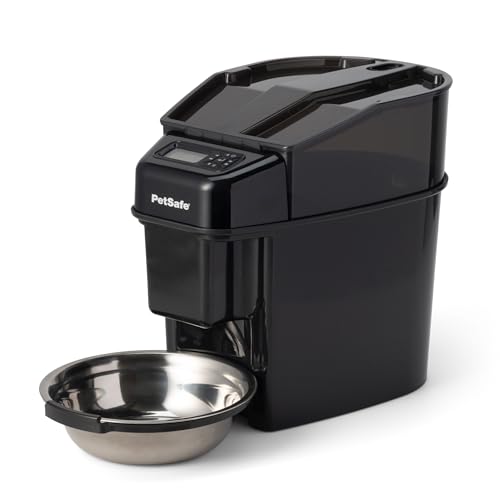
PetSafe Healthy Pet Simply Feed Automatic Feeder for Cats and Dogs, 24 Cups
What Are Your Options for Wet Food?
To feed wet food automatically, you need a different machine entirely: a “Carousel” or “Clamshell” style feeder with ice packs, or a fully refrigerated smart feeder.
1. Carousel Feeders with Ice Packs (The Standard Solution)
These feeders look like a large round disc divided into 5 or 6 pie slices. You fill each slice with a portion of wet food, place a frozen ice pack underneath the tray, and a cover rotates on a timer to expose one meal at a time.
Pros:
- Relatively inexpensive ($40–$60)
- Easy to clean (trays are usually dishwasher safe)
- Can serve both wet food, dry food, or medication
Cons:
- The ice packs only keep food safely chilled for 12–24 hours maximum (depending on room temperature)
- Not suitable for a weekend away; requires daily refilling and ice pack swapping
- Clever cats can sometimes pry the rotating lid open
Best for: The owner who works 8–10 hour shifts and needs the cat to receive a mid-day wet food meal while the owner is at the office.
2. Clamshell Feeders (The 1-2 Meal Option)
These are simple boxes with spring-loaded lids. They have one or two compartments. You set a dial timer (like an old kitchen timer) or a digital clock, and at the set time, the latch releases, and the lid pops open. Most accommodate a small ice pack beneath the bowl.
Pros:
- Simplest mechanics, very reliable
- Cheapest option ($20–$40)
- Battery operated, easy to place anywhere
Cons:
- Only provides 1 or 2 meals before needing a refill
- Ice pack duration is very short (often just 8-12 hours)
Best for: Supplying a single extra wet food meal overnight so your CKD cat doesn’t wake you up at 4:00 AM.
3. Fully Refrigerated Smart Feeders (The Premium Solution)
A new category of feeders contains an actual thermoelectric cooling module (like a mini-fridge). They keep wet food safely below 40°F (4°C) for several days, rotating a tray or dispensing from a chilled hopper.
Pros:
- Genuinely keeps wet food fresh for 3+ days
- Allows you to go away for a weekend while maintaining a wet food diet
- Often app-controlled
Cons:
- Very expensive ($200–$400+)
- Must be plugged into a wall outlet (no battery-only operation because cooling requires high power)
- The cooling fan produces a constant low hum
Best for: Owners with the budget who travel frequently for 2-3 days and cannot compromise on the wet food diet.
Crucial Tips for Managing Wet Food Feeders
1. Add extra water to the wet food. For a CKD cat, hydration is everything. When you portion the wet food into the automatic feeder trays, mix in an extra tablespoon of warm water to make a “soup.” This adds hidden hydration and prevents the surface of the wet food from drying out into an unappetizing crust before the lid opens.
2. Buy extra ice packs immediately. If you buy a carousel feeder, buy a second set of ice packs from the manufacturer on day one. You need one set in the freezer while the other is in the feeder. Without two sets, the logistics of turnaround time become impossible.
3. Test the opening sound. Carousel and clamshell feeders make a mechanical “whir” or a loud “clack” when they open. Skittish senior cats can be terrified by this. For the first week, trigger the opening manually while offering high-value treats near the feeder to build a positive association with the sound.
The Hybrid Approach
If an automatic wet food feeder proves too complex or expensive, many CKD cat owners adopt a hybrid approach:
- Morning and Evening: Owner manually serves high-quality wet food meals.
- Mid-day and Overnight: An automatic timed feeder dispenses a specialized renal-support dry kibble.
- Always Available: Multiple cat water fountains placed throughout the house to maximize incidental drinking.
While a 100% wet food diet is the gold standard for CKD, a hybrid approach ensures the cat receives necessary calories and veterinary renal support during hours the owner cannot be present, without risking spoiled wet food.
For standard timed kibble options to support a hybrid feeding schedule, review our Automatic Timed Feeders rankings. If you need a fountain to encourage more drinking, see our guide on The Quietest Fountains for Nervous Cats.
This post contains affiliate links. We may earn a commission when you purchase through our links at no extra cost to you.