Find out everything you need to know about what are the disadvantages of a cat water fountain
While running water encourages hydration, the main disadvantages of a cat water fountain include constant cleaning demands, noisy motors, and ongoing filter replacement costs. Based on our analysis of Amazon customer reviews as of September 2026, many owners also struggle with slime buildup and power cord safety.
The Short Answer
If you picture a cat water fountain as a “set-it-and-forget-it” solution, reality might surprise you. While they are excellent for picky drinkers, they require far more maintenance than a standard bowl.
Without weekly deep cleaning, fountains quickly accumulate a slippery biofilm of cat saliva, dust, and hair. They also require a continuous power source, make a constant humming noise that can scare timid cats, and cost a surprising amount over time in replacement filters.
Why This Happens
To understand why these issues crop up, we have to look at how these devices operate.
1. The Dreaded Biofilm (Slime)
Every time your cat drinks, they transfer saliva back into the water. In a stagnant bowl, you notice the dirtiness quickly and dump it. In a fountain, the water keeps moving, which masks the buildup. Over a few days, this saliva combines with organic matter to form a slick, bacterial biofilm on the walls and inside the pump.
2. Plastic Scratches and Feline Acne
Many affordable fountains are made of plastic. While budget-friendly, plastic scratches easily during cleaning. These microscopic grooves become breeding grounds for bacteria that are nearly impossible to scrub out. When your cat’s chin rubs against the plastic while drinking, this bacteria can cause feline acne—painful blackheads and pustules on their chin.
3. Pump Burnout and Noise
The heart of any fountain is a tiny submersible pump. If the water level drops too low because of evaporation or heavy drinking, the pump will run dry, overheat, and burn out. Even when full, cheap pumps can vibrate against the fountain floor, creating an irritating hum that might deter your cat from approaching.
4. Ongoing Maintenance Costs
Fountains rely on carbon and foam filters to catch hair and debris. These filters must be replaced every two to four weeks. If you skip this, the filter clogs, the water stops flowing properly, and the trapped debris begins to rot, ruining the water quality.
What to Look For
If you want to enjoy the hydration benefits of running water while minimizing the disadvantages of a cat water fountain, look for specific design features that make life easier.
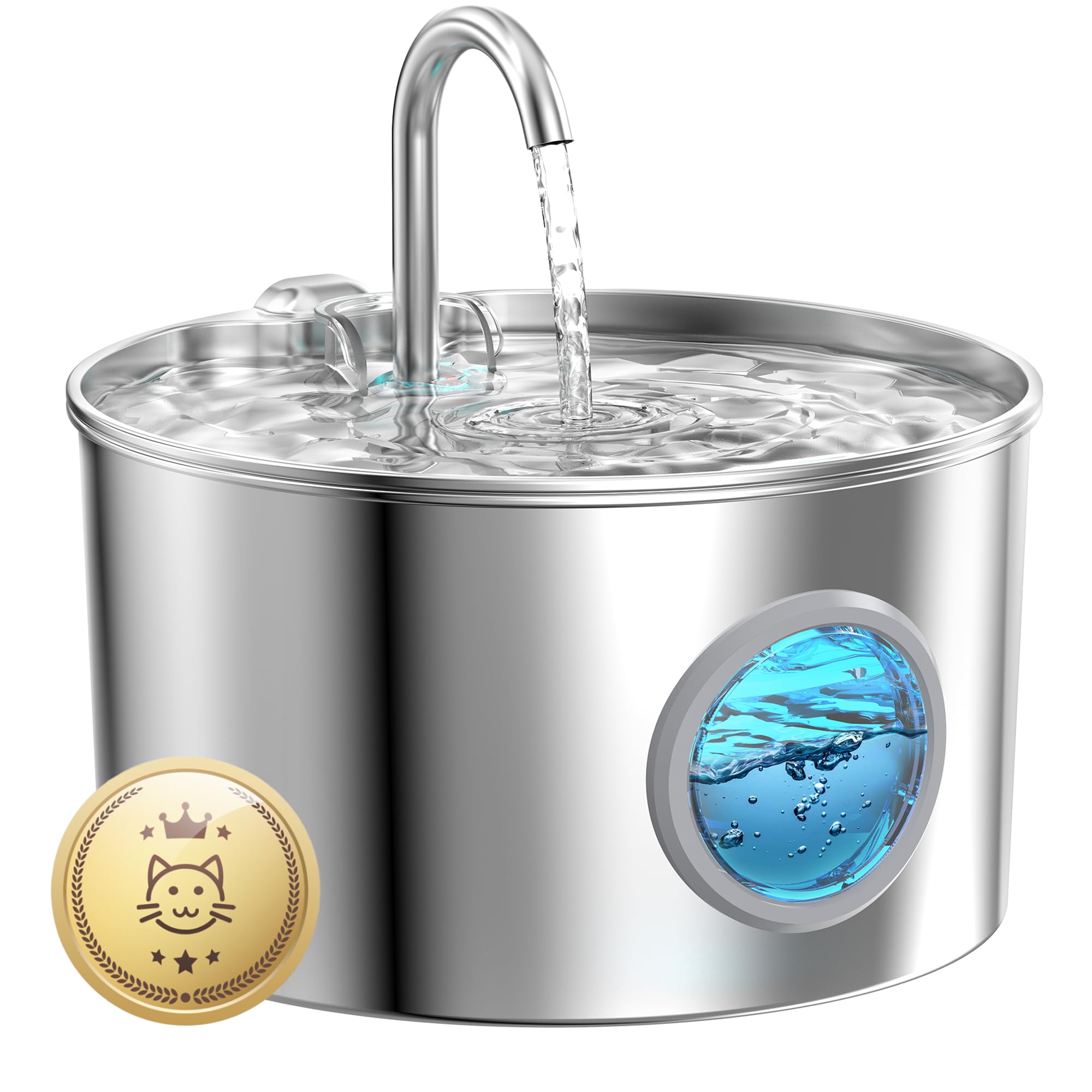
- Dishwasher-Safe Materials: Prioritize heavy ceramic or food-grade stainless steel. These materials do not scratch easily, do not harbor bacteria, and can be tossed directly into the dishwasher for sanitizing.
- Simple Pump Designs: Choose models where the pump is easy to disassemble. If you cannot open the pump cover to clean the magnetic impeller with a small brush, the pump will likely fail within a few months.
- Quiet Operation (Under 30 dB): Look for fountains that route the water along a gentle slope rather than letting it free-fall, which reduces splashing sounds and motor vibration.
What Won’t Work
When trying to manage these downsides, avoid these common shortcuts:
- Just topping off the water: Simply pouring fresh water into a depleting fountain does not clean it. It just dilutes the dirty, saliva-laden water already cycling through the system.
- Rinsing filters instead of replacing them: You cannot wash out activated carbon. Rinsing a dirty filter under the tap might remove large hairs, but it will not restore its chemical filtration properties or clear out trapped bacteria.
- Using harsh chemical cleaners: Bleach or strong dish soaps can leave behind chemical residues that are highly toxic to cats. Stick to mild, unscented dish soap or a diluted white vinegar solution to break down mineral scale.
Frequently Asked Questions
Are cat water fountains sanitary?
They are only sanitary if they are washed thoroughly once a week. Because the water recirculates, a neglected fountain can actually harbor more bacteria and mold than a simple ceramic bowl washed daily.
Do fountains use a lot of electricity?
No. Most modern pet fountains use low-voltage USB pumps that draw between 1 and 3 watts. Running one continuously costs pennies a month, though you will need to keep it positioned near an electrical outlet.
Why does my cat knock the fountain over?
Cats often splash or nudge fountains because they are trying to gauge where the water level is, or they dislike the vibration. Purchasing a heavy ceramic or stainless steel model prevents them from tipping it over and flooding your floors.
This post contains affiliate links. We may earn a commission when you purchase through our links at no extra cost to you.