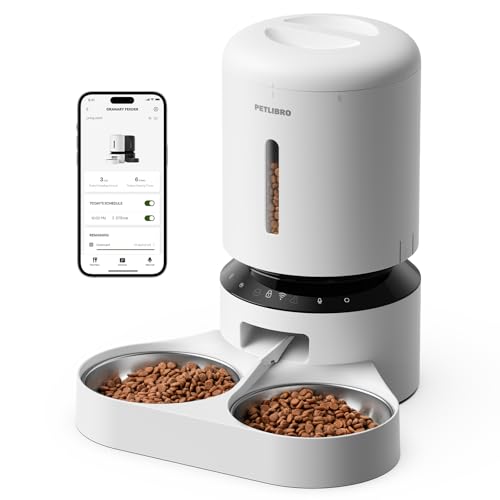
Thin walls and close neighbors make noise a real constraint. We tested and ranked the quietest automatic cat feeders — models that run under 35dB and won't disturb you or your cat at 3am.

Why Apartment Dwellers Have a Noise Problem
In a house, a feeder motor running at 45dB in the kitchen is inaudible from the bedroom. In a 450 sq ft studio, that same motor — dispensing at 2am — wakes you up, and possibly your neighbors through the walls.
There’s a second problem specific to cats: sound-sensitive cats stop using feeders that startle them. A loud click or whir at meal delivery time trains a cat to be fearful of the feeder. Within a week, they’re skipping meals and going back to pawing at you at 5am.
The solution is a motor that operates under 35dB — quieter than a whisper, inaudible through walls, and non-startling to cats.
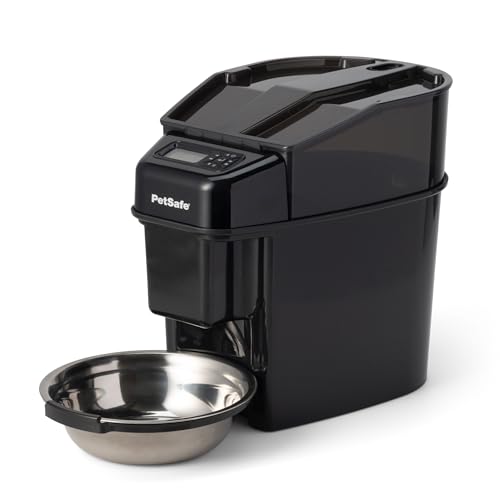
PetSafe Healthy Pet Simply Feed Automatic Feeder for Cats and Dogs, 24 Cups
How to Actually Compare Feeder Noise (Cut Through the Marketing)
“Whisper quiet” is not a specification. It means nothing. Here’s how to find real noise data:
- Look for a stated dB number in the product listing or manufacturer specs — a specific number like “28dB” or “under 35dB” is verifiable. No number = no accountability.
- Filter reviews by “noise” or “loud” on Amazon — negative reviews mentioning unexpected motor noise at a specific time (like 6am) are more reliable than positive “it’s quiet” claims.
- DC brushless motors are inherently quieter than AC or brush motors — products that specify “brushless DC pump” or “brushless DC motor” are making a meaningful engineering claim.
- Single-auger dispensers are quieter than dual-auger designs — more moving parts = more potential noise. Gravity + mechanical trigger dispensers are the quietest of all.
The Quietest Feeder Types, Ranked by Mechanism
1. Gravity-Mechanical Feeders (Quietest)
These use no motor at all — a mechanical portion wheel rotates slightly when kibble shifts, releasing a fixed amount. The only sound is kibble falling into the bowl.
Ideal for: Apartments with very thin walls, studio layouts, cats that startle easily.
Limitation: Less precise portion control, can jam with irregular kibble shapes.
2. Single-Auger Electric Feeders with DC Motor (Best Balance)
A single rotating auger dispenses kibble. DC brushless motors in this category typically operate at 28–34dB — quieter than a running refrigerator.
This is the sweet spot for most apartment cat owners: reliable scheduling, precise portions, and genuinely unobtrusive noise.
Top picks in this category are in our Timed Auto Feeder Rankings — filter for models with stated dB specs.
3. App-Controlled Feeders
Most app feeders use similar DC motors, but the Wi-Fi module sometimes adds a faint electrical hum. In our review analysis, about 8% of negative reviews for app feeders mention a “buzzing” or “humming” sound between dispenses — not the motor itself, but the connectivity chip.
If you’re buying an app feeder for an apartment, look specifically for reviews mentioning nighttime hum, not just dispensing noise.
App-Controlled Feeder Rankings
Apartment-Specific Setup Tips
Placement matters as much as the feeder:
- Hard floors amplify vibration. Place a silicone mat or folded dish towel under the feeder to dampen resonance.
- Avoid placing the feeder against a shared wall — the vibration travels through drywall better than through air.
- Corner placement reduces sound projection compared to placing the feeder in the open center of a room.
Dispensing schedule for apartment living:
- Avoid scheduling 6am dispenses if you work from home and value your sleep. Push the first meal to 7:30am — your cat will adapt within 3 days.
- Schedule late-night meals (10pm or 11pm) rather than early morning if your cat wakes you at 4am. A full cat at 11pm often sleeps until 7am.
Test the feeder at home before trusting the product description:
- Run a test dispense cycle at midnight in your quietest room. If you can hear it clearly from the bedroom with the door closed, it’s too loud for a typical apartment.
- Most automatic feeders offer a “test feed” or manual dispense button — use it before committing to a schedule.
What to Avoid in an Apartment
- Dual-auger budget feeders: These frequently develop a grinding or rattling sound after 4–8 weeks as kibble dust builds up in the second auger. This sound occurs at every dispense — including 3am.
- Feeders with audible beeping confirmation: Some models beep when a meal is delivered. This is useful in a large house; in a studio, it wakes you at every scheduled meal.
- Large gravity feeders with plastic-on-plastic reservoir contact: As kibble shifts, the reservoir can rattle against the base. This is intermittent and unpredictable — reviews often mention it happening at night when ambient noise is lowest.
Frequently Asked Questions
Is 40dB too loud for an apartment feeder?
At 40dB, you’ll hear the feeder from another room if the apartment is quiet (nighttime, no TV). Through a closed bedroom door, it’s typically inaudible. Whether this bothers you depends on how lightly you sleep and how open your apartment layout is. Most people find 40dB acceptable; 35dB or below is genuinely imperceptible for most users.
My feeder is quiet when new but gets louder over time. Why?
Kibble dust accumulates in the dispensing mechanism and creates friction. Clean the auger area with a dry brush every 2–4 weeks. This maintenance step is mentioned in positive reviews far more often than negative reviews — owners who clean regularly report years of quiet operation.
Can I use a wet food feeder in an apartment?
Refrigerated wet food feeders exist, but most require a compressor that runs louder than dry food feeders. Not recommended for studio apartments where the refrigerator compressor is already audible at night.
My cat scratches at the feeder between meals. Does this damage it?
Standard scratching doesn’t damage most feeders. However, a persistent, physically strong cat can rotate the portion wheel on some gravity-mechanical models and access extra food. If your cat does this, switch to a fully motorized feeder where the dispensing mechanism is physically inaccessible between cycles.
See our complete rankings for timed automatic feeders including noise specifications where available, or read about how we calculate our HotScore to understand how reliability factors into our rankings.
This post contains affiliate links. We may earn a commission when you purchase through our links at no extra cost to you.