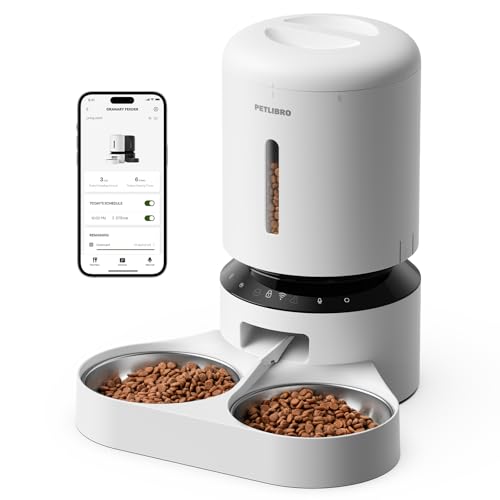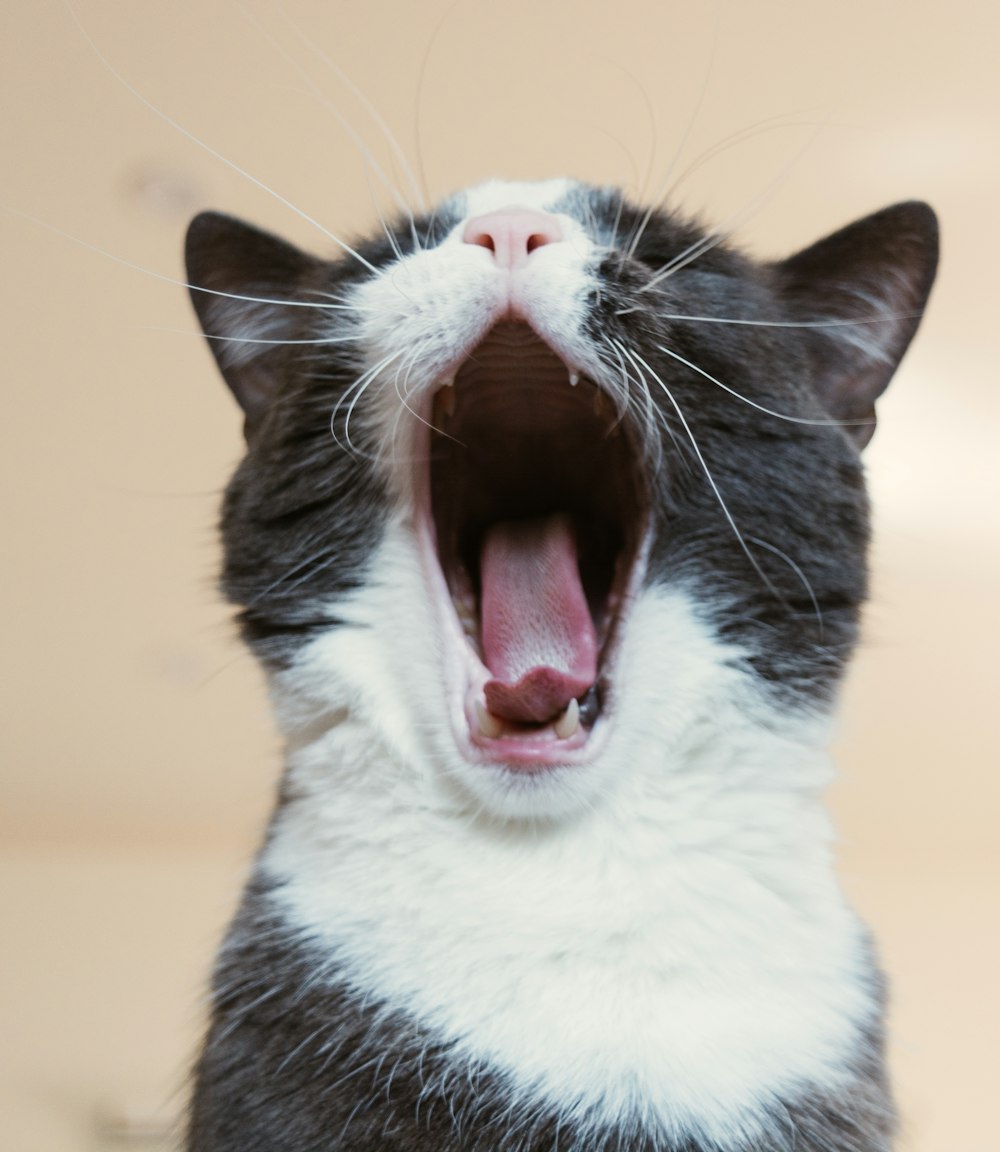
Is a plastic cat feeder safe? We break down the connection between plastic food bowls, feline acne, and bacteria growth—and when upgrading to a stainless steel feeder bowl is medically necessary.

The Real Difference Isn’t the Hopper
When choosing an automatic feeder, you’re almost always buying a plastic hopper (the storage bin). Stainless steel hoppers are incredibly rare because they block Wi-Fi signals and make it impossible to see the food level visually.
The safety debate isn’t about the hopper—it’s about the dispensing bowl where your cat actually eats.
Nearly all premium automatic feeders now offer a choice: a standard plastic bowl or a removable stainless steel insert. Based on veterinary dermatology data and thousands of owner reviews, that stainless steel upgrade is often the most important feature you can buy.
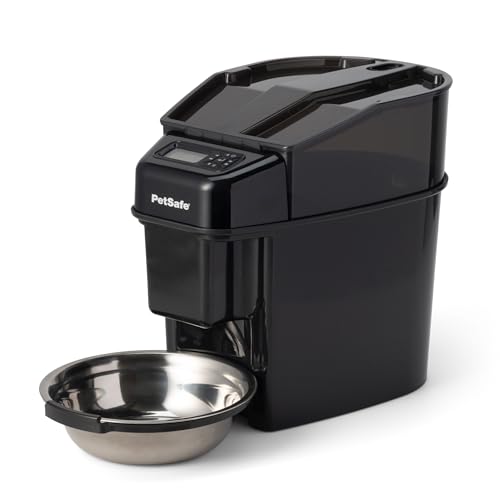
PetSafe Healthy Pet Simply Feed Automatic Feeder for Cats and Dogs, 24 Cups
The Problem with Plastic Bowls: Feline Acne
Feline acne appears as blackheads, dirt-like specks, or inflamed bumps on a cat’s chin and lower lip. While the exact cause involves multiple factors (including overactive sebaceous glands), the primary environmental trigger is bacterial transfer from plastic food and water bowls.
Why plastic causes problems: Plastic is porous at a microscopic level. Even BPA-free, food-grade plastic develops invisible micro-scratches from daily use, washing, and your cat’s teeth or tongue.
These scratches become permanent homes for bacteria and residual oils from cat food. Washing a plastic bowl with a sponge rarely reaches the bottom of these microscopic grooves. When your cat’s chin rests against the bowl edge while eating, those trapped bacteria transfer directly to the hair follicles, triggering an acne flare-up.
Stainless Steel: The Hygienic Solution
Grade 304 stainless steel (the standard for kitchenware and medical equipment) is non-porous. It does not develop micro-scratches under normal use.
When you wash a stainless steel bowl in hot water or run it through the dishwasher, you remove 100% of the surface bacteria and food oils. There are no microscopic hiding places.
For cats prone to chin acne, switching from a plastic bowl to a stainless steel or ceramic bowl is step one of the veterinary treatment protocol. It often resolves mild cases entirely without medication.
Beyond Acne: Odor and Taste Aversion
Cats have a sense of smell 14 times stronger than humans.
Because plastic absorbs oils, a plastic bowl that has held salmon-flavored kibble for 6 months will perpetually smell slightly of oxidized fish oil—even after washing. To a cat, this stale, rancid background odor can cause sudden food aversion. They stop eating from the feeder and owners assume they are “tired of their food.”
Stainless steel is completely inert. It absorbs nothing, emits no odor, and imparts zero taste to the food. A washed stainless bowl smells like nothing at all, allowing your cat to smell only fresh kibble.
How to Check if a Feeder’s Stainless Bowl is Actually Good
Not all stainless steel upgrades are created equal. When evaluating a feeder, look for:
1. Grade 304 Designation
Cheap feeders sometimes use lower-grade 200-series stainless steel, which can rust or pit over time, defeating the purpose. Look specifically for “304 stainless” or “food-grade 304” in the product description.
2. Dishwasher Safety
The stainless insert should be completely removable from the plastic base so it can go in the dishwasher. If the stainless bowl is permanently glued into the base housing, you can’t dishwash it, significantly reducing its hygienic advantage.
3. Edge Design
The edge of the bowl where your cat’s chin rests should be covered by the stainless insert. Some feeders have a metal bottom but a wide plastic rim. The rim is what contacts the chin, meaning the acne risk remains high.
What About Ceramic?
Ceramic is functionally identical to stainless steel in terms of hygiene and acne prevention, provided the glaze is intact. However, ceramic is fragile and heavy, making it a rare option for automatic feeders which rely on snap-in components. Stainless steel offers the best balance of hygiene and durability for feeder bowls.
The Verdict
If your budget allows, always choose the stainless steel bowl option when buying an automatic feeder.
The $10–$15 price difference over the lifespan of the feeder is negligible compared to the veterinary cost of treating a severe feline acne infection. If your cat currently has dark specks on their chin, upgrading to a stainless steel bowl is an immediate necessity, not a luxury.
Compare feeders that offer high-quality stainless steel bowl inserts in our Timed Auto Feeders and App-Controlled Feeders rankings.
This post contains affiliate links. We may earn a commission when you purchase through our links at no extra cost to you.