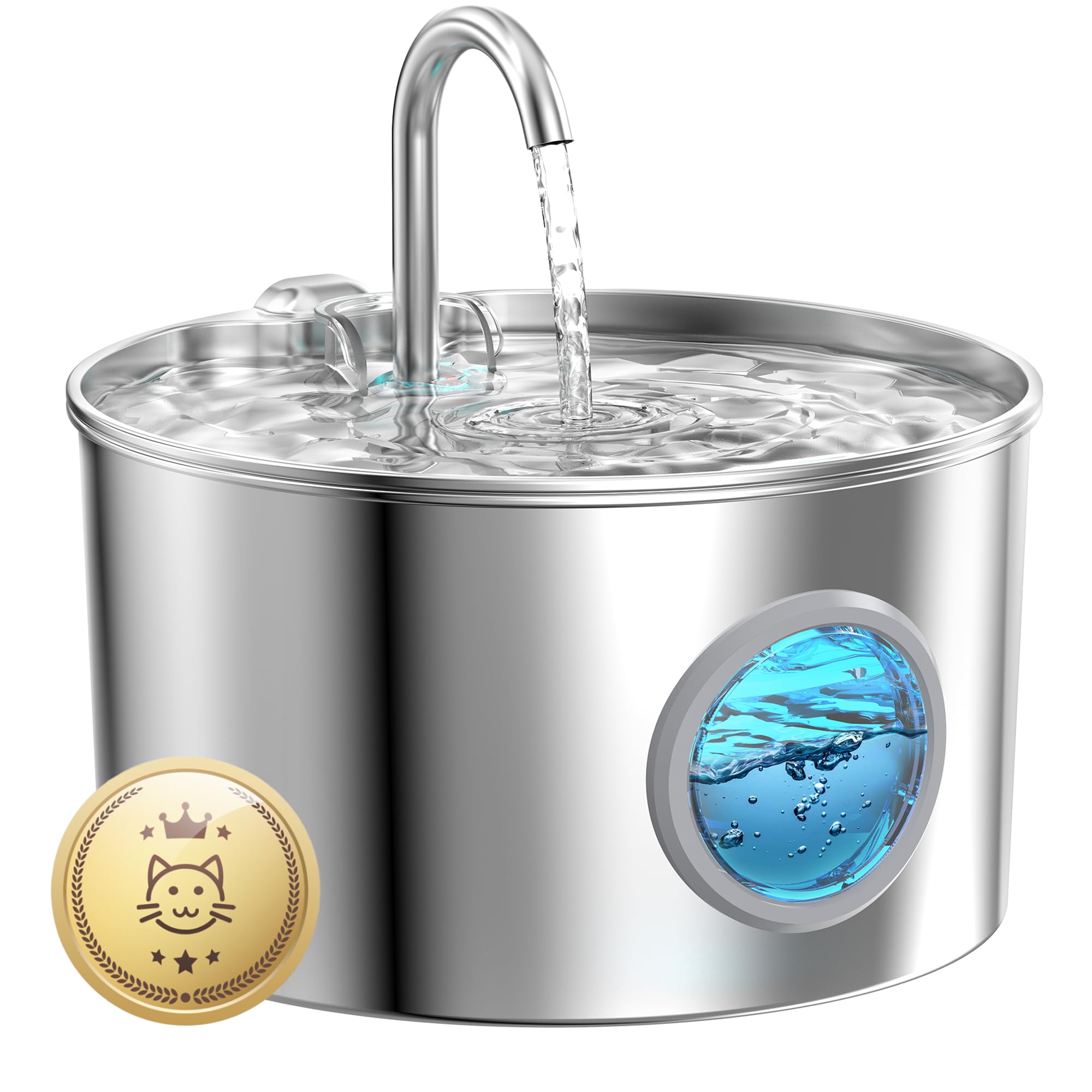
That slimy film in your cat's fountain is biofilm — a bacterial colony. We explain exactly why it forms, which fountain materials resist it best, and the cleaning routine that prevents it from coming back.

What That Slime Actually Is
The biofilm in your cat’s fountain is a structured colony of bacteria — primarily Pseudomonas and Staphylococcus species — embedded in a self-secreted polysaccharide matrix. It’s not just dirty water. It’s a living structure that actively resists cleaning agents, adheres to surfaces, and regrows faster with each cycle.
Once biofilm establishes in a fountain, it reproduces in 24–48 hours after cleaning. The biofilm “seeds” itself into micro-scratches and porous surface areas of the fountain, particularly plastic. This is why a plastic fountain that gets slimy once seems to get slimy faster after each subsequent cleaning.
Understanding this changes how you approach the problem — it’s not about cleaning harder, it’s about:
- Choosing materials that don’t harbor biofilm seeds
- Removing biofilm completely (not just visibly)
- Maintaining a cleaning frequency that prevents the colony from re-establishing
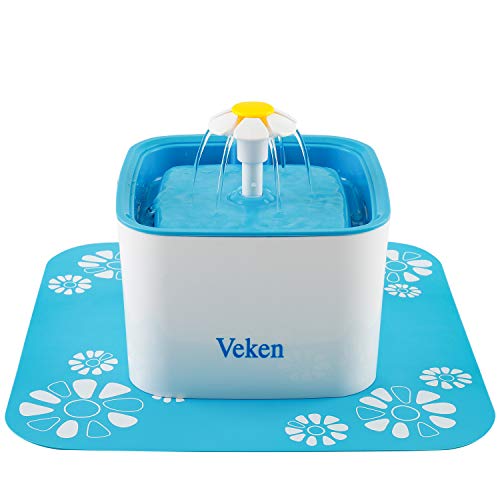
Veken Pet Fountain 84oz/2.5L Automatic Cat Water Fountain with 3 Replacement Filters & 1 Silicone Mat
Which Materials Resist Slime Best
Stainless Steel (Best)
Stainless steel has a non-porous, scratch-resistant surface. Biofilm cannot embed in micro-scratches because there effectively are none — assuming Grade 304 or above stainless, which is what all reputable fountain manufacturers use.
Additionally, stainless steel is fully dishwasher-safe. High-temperature dishwasher cycles (above 60°C/140°F) kill biofilm colonies that manual washing leaves behind.
The tradeoff: stainless steel fountains cost more upfront. But they last significantly longer — buyers in our review analysis who switched from plastic to stainless report never having a slime problem again.
See stainless steel fountain rankings
Ceramic (Excellent)
Ceramic is similarly non-porous and smooth. Many cats prefer the taste of water from ceramic due to the complete absence of flavor leaching that plastic produces.
Ceramic fountains are less common than stainless, and most are heavier. The pump is typically plastic (unavoidable), which means you still need to clean the pump assembly carefully — the ceramic basin itself will remain slime-free.
Tritan/PETG Plastic (Acceptable with Diligent Maintenance)
Not all plastics are equal. Tritan (BPA-free copolyester) and PETG are the least porous of the plastic fountain materials and resist biofilm better than standard ABS or polypropylene. Some manufacturers specifically note Tritan construction.
However, even Tritan develops micro-scratches over 6–12 months of use. At that point, biofilm colonizes faster regardless of material grade. Replacing a plastic fountain annually is more realistic than cleaning it into permanent cleanliness.
Standard Plastic (Avoid if Slime Is Already a Problem)
Standard plastic fountains — common in budget models — are porous, develop micro-scratches quickly, and are usually not dishwasher-safe (warping risk). These are the fountains that get slimy within 1–2 weeks regardless of cleaning frequency. If you’re reading this guide because your current fountain is getting slimy despite regular cleaning, this is likely the cause.
The Cleaning Routine That Actually Works
Weekly (Minimum)
- Disassemble completely — remove pump, filter, all trays and surfaces
- Soak all plastic parts in a solution of 1 part white vinegar to 3 parts water for 30 minutes
- Scrub with a dedicated fountain brush (not your dish brush — the same brush used for other dishes transfers food bacteria)
- Rinse thoroughly — vinegar residue changes the water taste and cats will notice
- If you have a dishwasher and the parts are rated dishwasher-safe, run them on the top rack at 60°C+
The Pump (Most Critical Step, Most Often Skipped)
The pump is where biofilm is most concentrated. Its internal surfaces contact water continuously and are warm from the motor — ideal biofilm conditions.
To clean the pump:
- Remove it from the fountain
- Submerge in diluted white vinegar solution for 30 minutes
- Use a small brush (pipe cleaner or pump-specific brush) to scrub inside the intake and impeller areas
- Run it in clean water for 2 minutes to flush residue
Never run the pump dry — this damages the impeller bearings.
Filter Replacement (Biofilm’s Favorite Hiding Spot)
Most fountain filters are rated for 2–4 weeks. Once a carbon filter is exhausted, it stops filtering and starts hosting biofilm. The filter itself becomes a contamination source.
Replace on schedule — not “when it looks dirty.” A filter can harbor significant biofilm before showing visible discoloration.
Why Fountains Get Slimy Faster Over Time
New fountains have smooth surfaces. Over months, normal use creates invisible micro-scratches in plastic components. Each scratch is a harbor for biofilm. The bacteria in these harbors survive cleaning cycles and re-seed the fountain faster after each wash.
This is the “diminishing returns” effect many cat owners notice: a fountain that stayed clean for 2 weeks when new now gets slimy in 4 days after a year of use. It’s not that you’re cleaning it less — the surface has changed.
The solution: Replace plastic components annually. Or switch to stainless steel permanently.
Products That Actually Help (And What Doesn’t Work)
What works:
- White vinegar soaks (cheap, effective against most biofilm)
- Citric acid descaler monthly (removes mineral deposits that biofilm attaches to)
- High-temperature dishwasher cycles for dishwasher-safe parts
- Dedicated fountain brush kits with pump brushes
What doesn’t work:
- “Water purifying” tabs or drops: These may reduce mineral deposits but don’t address biofilm in scratched surfaces
- Wiping visible slime without soaking: You remove the visible colony but leave the embedding structure intact. Regrowth happens in 24–48 hours.
- Bleach: Effective, but trace residue can harm cats. Requires extensive rinsing and neutralizing. White vinegar is safer and nearly as effective for routine cleaning.
Frequently Asked Questions
My fountain gets slimy within 3 days of cleaning. What am I doing wrong?
Nothing — your fountain’s plastic surfaces are likely heavily micro-scratched. The cleaning removes the visible colony but not the embedded biofilm matrix. Switch to a stainless steel fountain. Within weeks, your cleaning cadence will stretch to 7–10 days naturally.
Is biofilm dangerous to cats?
Mild biofilm exposure is generally not clinically concerning for healthy adult cats — their immune systems handle it. However, cats with compromised immunity (FIV, FeLV, on long-term corticosteroids), senior cats, or kittens are more vulnerable. For these cats, stainless steel and rigorous weekly cleaning is strongly recommended.
My fountain smells like plastic even after cleaning. Is that harmful?
Plastic odor typically indicates off-gassing from the material, not biofilm. This is more common in new fountains (off-gassing decreases over time) or lower-quality plastics. It’s generally not harmful but cats often refuse water with strong plastic smell. Upgrade to stainless or ceramic if this persists.
Can I use dish soap to clean the fountain?
Mild, unscented dish soap is acceptable. Rinse extremely thoroughly — any soap residue changes the water taste and cats will often refuse to drink from a fountain that smells like soap. White vinegar or citric acid are more cat-friendly alternatives.
For fountains specifically designed for easy cleaning and slime prevention: Stainless Steel Fountain Rankings and Filtered Fountain Rankings.
This post contains affiliate links. We may earn a commission when you purchase through our links at no extra cost to you.