Arthritis makes drinking from a standard bowl painful for senior cats. The right fountain design can eliminate that pain — but most fountains weren't designed with mobility limitations in mind. Here's what to look for.
Why Arthritis Changes the Drinking Equation
A standard floor-level water bowl requires a cat to lower their head, flex their spine, and hold that position while drinking. For a young, healthy cat, this is effortless. For a senior cat with arthritis — particularly in the cervical spine, shoulders, or hips — this posture is uncomfortable. Many arthritic cats drink less not because they’re not thirsty, but because drinking hurts.
Dehydration in senior cats accelerates the progression of chronic kidney disease (CKD), which affects an estimated 30–40% of cats over 12 years old. The connection between joint pain, reduced drinking, and kidney health is clinically documented and frequently underappreciated.
The goal of a senior-appropriate fountain is to eliminate the physical barrier to drinking — so your cat can stay hydrated without pain.
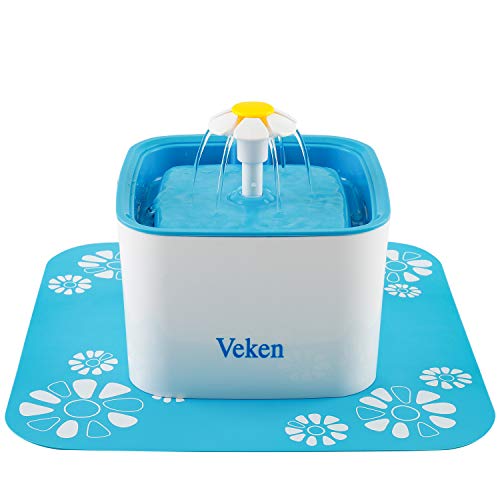
Veken Pet Fountain 84oz/2.5L Automatic Cat Water Fountain with 3 Replacement Filters & 1 Silicone Mat
The Two Physical Problems to Solve
1. Neck Flexion (Lowering the Head to Drink)
When a fountain bowl is on the floor and a cat must lower their head to reach the water surface, that downward neck flexion puts strain on cervical vertebrae. For cats with cervical osteoarthritis, this causes immediate pain on contact with water — they may approach the bowl and then back away.
Solution: Elevation. Raising the drinking surface so the cat can drink with their head in a neutral or slightly downward position — rather than steeply angled — dramatically reduces cervical strain. The ideal height is approximately chest level for your specific cat.
2. Stance Stability (Standing While Drinking)
Cats with hip or shoulder arthritis experience discomfort when maintaining the drinking posture for more than a few seconds. They may drink in shorter, more frequent sips, then rest — or avoid drinking if it requires prolonged uncomfortable standing.
Solution: A wide, stable fountain base that doesn’t wobble when contacted, positioned near a wall or in a corner so the cat can brace against something if needed. Some arthritic cats prefer a fountain placed slightly elevated so they can reach it while in a partial sit, reducing leg strain.
What to Look for in a Senior Cat Fountain
Elevated drinking surface or adjustable height: The ideal fountain allows drinking at chest height without the cat bending the neck steeply downward. Some fountains include an elevated platform riser. Alternatively, place any fountain on a stable raised surface (non-slip mat on a step or low stool).
Wide, shallow basin: A wide basin means the cat doesn’t need to lean in — they can drink from the near edge with minimal reach. Narrow top openings require more reach and more body extension.
Gentle, low-pressure flow: Arthritic cats move more slowly than younger cats. A high-pressure stream that splashes or requires precise positioning to catch in the mouth is frustrating. Opt for a gentle bubble or very slow stream setting.
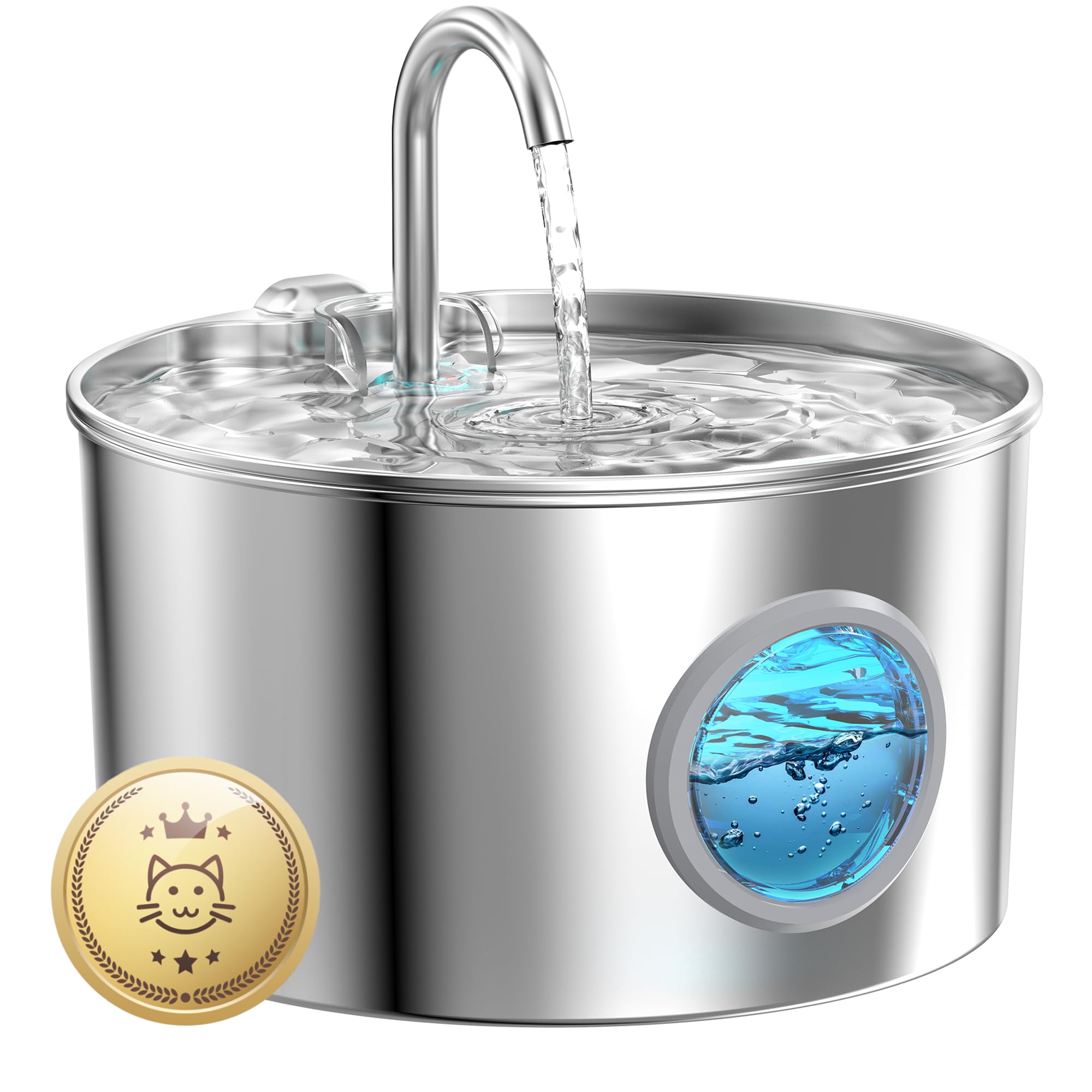
Non-slip base: Arthritic cats stabilize themselves by pressing against the feeder or fountain. A fountain that moves or tips when leaned against is both ineffective and a fall risk. Heavy ceramic or stainless steel fountains with rubber feet resist movement far better than light plastic models.
Very low noise or silent operation: Senior cats are often more sound-sensitive than they were when young. Noise-related stress compounds physical discomfort. Silent or near-silent operation is particularly valuable for older cats.
Placement Recommendations for Arthritic Cats
Near sleeping areas: An arthritic cat drinks more when the fountain is close to where they spend most of their time. A fountain across the house requires a painful walk that many arthritic cats will simply skip.
On a non-slip surface: Place the fountain on a rubber mat or non-slip rug. When arthritic cats lean into drinking, their paws can slide on smooth tile or hardwood — this instability becomes a reason to avoid the fountain.
Multiple locations: If your senior cat has a ground-floor resting spot and an upstairs sleeping area, a fountain at each level eliminates the stair negotiation for hydration. Two lower-cost fountains often provide more real-world drinking than one premium fountain in a less-accessible location.
Not in a high-traffic area: Arthritic cats may be slower to react to movement around them and can be startled by people or other pets approaching while they’re drinking. A quieter location reduces interruptions.
Kidney Disease and Drinking: The Connection
Many senior cats with arthritis also have chronic kidney disease. This creates a compounding problem: CKD causes increased thirst (the kidneys concentrate urine less effectively, so more water is needed), but arthritis limits the cat’s ability to seek and access water.
A senior cat with both conditions needs:
- Multiple water sources throughout the home
- At least one elevated fountain that can be reached without painful posture
- Easy-to-access bowl edges (no need to reach far in)
If your cat has been diagnosed with CKD, discuss hydration strategies with your vet — they may also recommend subcutaneous fluids, which supplement what the cat drinks and take pressure off the hydration-through-drinking requirement.
Signs Your Senior Cat’s Fountain Isn’t Working for Them
- Approaches the fountain but doesn’t drink (approaches more than drinks)
- Drinks in very short bursts (2–3 laps) then walks away, more frequently than before
- Prefers drinking from the edge of a full bathtub or other elevated water sources over the fountain
- Shows reluctance to lower their head despite apparent thirst (other water-seeking behavior)
These behavioral patterns suggest the fountain placement, height, or water level is causing discomfort. Adjust height, move to a better location, or switch to an elevated-basin design.
Frequently Asked Questions
My arthritic cat is drinking from the faucet but not the fountain. What does this mean?
Faucet drinking is at counter height — approximately chest or chin level — requiring minimal neck flexion. This is your cat telling you that the floor-level fountain position is painful. Elevate the fountain or find a model with a significantly raised drinking surface.
Should I get a fountain even if my senior cat has never used one?
Yes, but introduce it carefully. Senior cats with established habits take longer to accept new objects. Place the fountain (unpowered) in a comfortable location for 3–5 days. Let the cat investigate. Then power it on at the lowest flow setting.
My cat’s arthritis is in the hips, not the neck. Does fountain height still matter?
Hip arthritis affects the posture and stance required while drinking. An elevated fountain reduces leg strain because the cat can drink in a partial sit or with a less extended posture. Even for hip-specific arthritis, elevation helps.
How often should senior cats drink?
There’s no single standard — it varies by body weight, diet (wet vs. dry), and kidney function. What matters is consistency. If you notice a significant decrease in drinking behavior over days, consult your vet — in senior cats, reduced water intake can indicate an acute health change.
For fountain rankings suited to senior cats and multi-cat households: Filtered Fountain Rankings and Stainless Steel Fountain Rankings.
This post contains affiliate links. We may earn a commission when you purchase through our links at no extra cost to you.