Most cat owners replace fountain filters too late — or not at all. We explain exactly when to replace each filter type, what degradation looks like, and what happens to your cat's water quality when you skip the schedule.
The Short Answer
Most fountain filters should be replaced every 2–4 weeks. In a single-cat household with hard water, closer to 4 weeks. In a multi-cat household or with soft water that’s high in organic matter, closer to 2 weeks.
The variability is real — and the consequence of skipping replacement is that the filter shifts from filtering water to contaminating it.
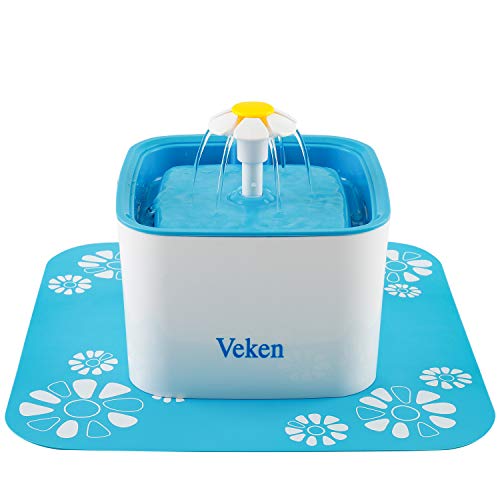
Veken Pet Fountain 84oz/2.5L Automatic Cat Water Fountain with 3 Replacement Filters & 1 Silicone Mat
What Fountain Filters Actually Do
Most cat fountain filters combine two mechanisms in one unit:
Activated carbon (charcoal layer): Adsorbs dissolved impurities — chlorine, chloramine, certain heavy metals, and organic compounds that cause taste and odor changes. This is what makes water taste “fresh” from a filtered fountain versus a standing bowl.
Mechanical foam or fiber layer: Catches physical debris — hair, food particles, dust, and mineral sediment. Prevents these from cycling back into the water and clogging the pump.
These two layers degrade at different rates and for different reasons. The carbon layer becomes chemically saturated — it can no longer bind to new contaminants. The mechanical layer becomes physically clogged — water bypasses rather than flows through it.
Once either layer reaches saturation or clogging, the filter stops working. An exhausted carbon layer doesn’t just “stop filtering” — it can begin releasing previously captured compounds back into the water. This reverse-release is well-documented in water treatment literature and is the primary reason running a fountain filter past its rated life is worse than using no filter at all.
When Each Type Needs Replacement
Standard Carbon + Foam Filter (Most Common)
Replacement interval: Every 2–4 weeks
Signs of exhaustion:
- Water develops a faint musty or earthy smell
- Your cat drinks less from the fountain without any other change
- The foam layer is visibly discolored and water flow through the fountain slows
- You can see small floating particles that were previously filtered out
Ion Exchange Resin Filter (Some Premium Fountains)
Replacement interval: Every 4–8 weeks
Ion exchange resins soften water by replacing calcium and magnesium ions. These saturate based on water hardness — in a hard water area, they exhaust faster.
Signs of exhaustion: Visible mineral deposits (white scale) beginning to form on the fountain pump and bowl rim despite regular filter use.
Stainless Steel Mesh Pre-Filter (If Separate)
Replacement interval: Does not need replacing — clean monthly with a soft brush and white vinegar soak
Stainless mesh pre-filters catch large debris before the main filter. They don’t chemically exhaust — they just clog. Clean, don’t replace.
What Happens When You Skip Filter Replacement
Weeks 1–4 (normal range): Filter functioning normally. Water is fresh, no taste issues, cat drinks regularly.
Weeks 5–6: Carbon approaches chemical saturation. Chlorine smell becomes slightly detectable. Cat may drink slightly less but this is subtle.
Week 7+: Carbon begins reverse-releasing. The foam layer is heavily colonized by bacteria using the trapped organic matter as nutrients. The filter becomes a contamination source. Water may smell faintly of biofilm even if the pump and bowl are clean.
Long-term: Cats with sensitive systems may show signs of reduced water intake, which over weeks can affect kidney function. Cats detect water quality changes that humans cannot — if your cat stops using a fountain that previously worked well, filter exhaustion is the first thing to check.
Making Filter Replacement Stick
The main reason filters are replaced late isn’t cost or availability — it’s that there’s no visible indicator that it’s time. Unlike an oil change light, an exhausted fountain filter looks nearly identical to a fresh one.
Systems that work:
Set a phone reminder: On the day you install a new filter, set a repeating monthly reminder. This costs 30 seconds to set up and completely eliminates the “when did I last change it?” problem.
Buy in multi-packs and keep them in the room with the fountain: Filters stored next to the fountain get replaced more often than filters stored in a closet. Friction matters.
Subscribe to the manufacturer’s filter subscription: Most major brands (PETLIBRO, Catit, PetSafe) offer monthly subscriptions for their proprietary filters. The auto-delivery arrives before you need to remember. Filter subscriptions typically cost 15–20% less than individual purchases.
Note the installation date with a marker on the filter: Write the date of installation on the filter edge before installing. When you see it’s been 4+ weeks, replace immediately.
Filter Compatibility and Generic Alternatives
Most fountains use proprietary filter shapes and the manufacturer will recommend their own replacement filters. Generic filters exist for many popular models and are typically 30–50% cheaper.
The risk with generics: activated carbon quality varies. Low-quality carbon provides minimal filtration even when new. If you switch to a generic and your cat stops using the fountain, the filter is the first suspect.
Established generic filter brands with consistent reviews: in our analysis of Amazon fountain filter reviews, buyers who switch to off-brand filters report similar satisfaction rates when the carbon density is comparable. The easiest check: weigh the generic filter against the OEM filter. Significantly lighter = less carbon = less filtration capacity.
Frequently Asked Questions
My fountain has a filter indicator light. Should I trust it?
Filter indicator lights on cat fountains are time-based, not chemistry-based. They count days since reset, not actual saturation. They’re useful as reminders but don’t measure actual filter exhaustion. In heavy-use situations or hard water areas, replace before the indicator light triggers.
Can I clean and reuse a carbon filter?
No. Rinsing a carbon filter removes surface debris but does nothing for chemical saturation. Once carbon has bound to its maximum capacity of contaminants, rinsing cannot regenerate it. Reusing an exhausted carbon filter gives your cat the appearance of filtration without the actual benefit.
My cat drinks more when I put in a fresh filter. Is that real?
Yes. Cats have sensitive taste and smell receptors tuned to water quality. Fresh carbon significantly reduces chlorine and organic compounds that alter taste. The increased drinking behavior after a filter change is a reliable behavioral indicator that the previous filter was exhausted.
How do I dispose of used fountain filters?
Standard carbon filters can go in household trash — the activated carbon is not hazardous. Ion exchange resin filters should check local guidance, as some resins have specific disposal requirements. Foam portions can be composted in some systems.
For fountain rankings that include filter cost information in total ownership cost calculations: Filtered Fountain Rankings and Stainless Steel Fountain Rankings.
This post contains affiliate links. We may earn a commission when you purchase through our links at no extra cost to you.